Twenty-one days in the shade
Three weeks before harvest, farmers cover the tea fields in shade cloth. The leaves change completely.
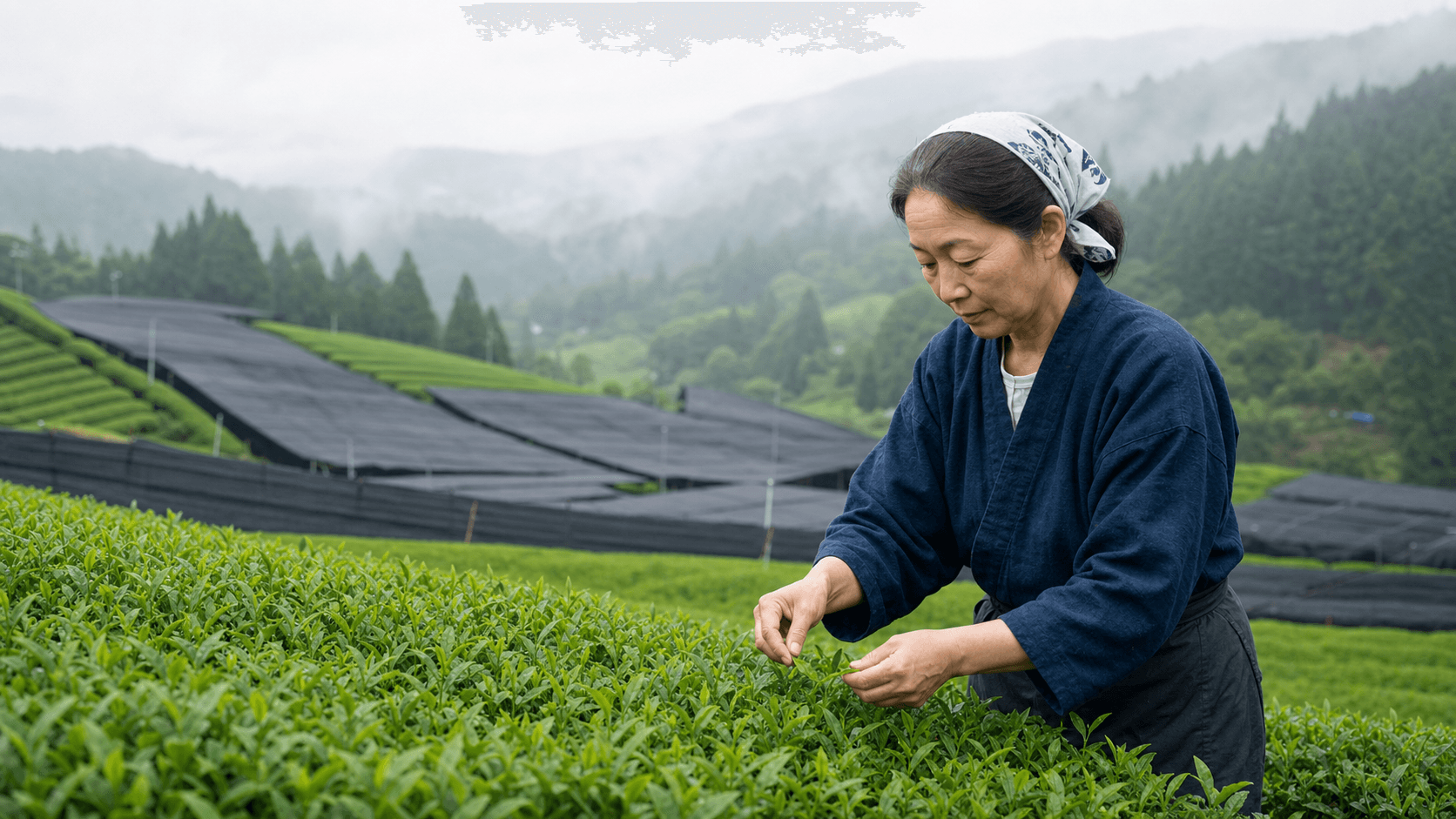
Three weeks before the spring harvest in Uji, the tea fields disappear. Farmers build bamboo frames, called tana, over the hedges and layer them with straw and dark netting until almost no sunlight gets through. By the end, the plants are sitting in 98% shade.
Without light, the leaves have to work harder. They stretch out, get thinner, and produce far more chlorophyll to catch whatever's left. They turn a deep, vivid green that you don't see in sun-grown tea. It's not subtle: the colour difference is obvious even before the leaves are picked.
“Take away the sunlight and the plant compensates. More chlorophyll, more amino acids, less bitterness. That's the whole trick.
”
The other thing shade does is stop the plant from converting L-theanine into catechins. L-theanine is what gives matcha its smooth, sweet, almost savoury quality. Catechins are what makes cheap green tea taste bitter and astringent. So shaded leaves keep the sweetness and lose the bite. When you grind them into powder, the green is so intense it almost looks unreal.
Interactive
The 21-Day Shading
Drag the slider to see what happens to the leaf as the shade deepens over 21 days.
Full sun. The plant converts amino acids into catechins: more bitterness, less sweetness.
Choose the next cup
Ready to turn the story into a ritual?
Compare the four tins by how you drink: water-only bowl, daily cup, milk and ice, or a warmer roasted pour.
On the slowness of the bowl
Twenty seconds of whisking, twice a day. It's the one thing in the morning that actually slows you down.
Lychee milk matcha, slowly poured
Cold lychee at the bottom, oat milk in the middle, matcha floated on top. You stir it once and the whole thing turns jade.